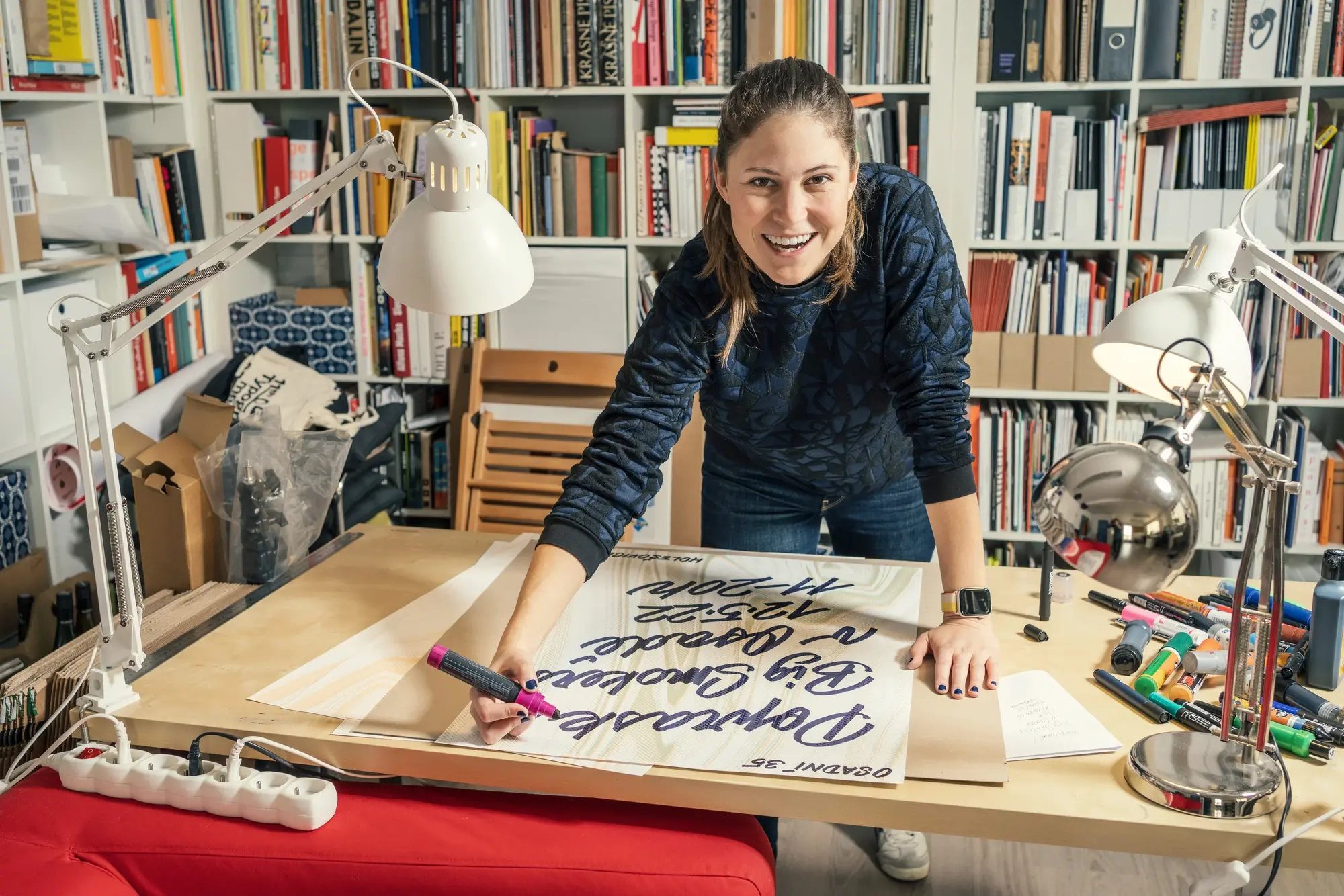
The flowing scripts of Petra Dočekalová
Czech type designer Petra Dočekalová joins Type Network with a body of work shaped by lettering, research, and a deep respect for typographic craft. From discovering Oldřich Hlavsa’s
Typographia 2
in her youth to releasing her first typeface as a student, her path into type design has been guided by curiosity and experimentation. In this interview, Petra reflects on starting her own foundry, finding inspiration in calligraphy and travel, and building a creative playground for ideas that no client has asked for—yet.
Lucas Czarnecki: If you can remember a specific moment, when and why did you become interested in type design?
Petra Dočekalová: Yes, I can. As a young graphic design student at secondary school, I came across Oldřich Hlavsa’s Typographia 2. He was a master at presenting letterforms in perfect compositions and close-up detail, so it was easy to fall in love with outlines and understand that this discipline is the “tip of the iceberg” in the world of graphic design.
LC: What’s the story behind your first published typeface?
PD: Monolina was released in 2014 as part of a school project called Bestsellers. It was one of 12 fonts created as a semester assignment at the UMPRUM Type Design & Typography Studio. Based on research of the font market between 2010–13, we students were tasked with creating a best-selling typeface and actually trying to sell it.
Monolina was based on my own handwriting and ended up as the second best-selling font during its 50 days in the “Hot New Fonts” section of MyFonts. In 2023, I decided to update it, and in 2025 I re-released an upgraded version, which is now available at Type Network.

Petra-D Type Foundry (est. 2025) is the independent studio of Czech type designer, calligrapher, and letterer Petra Dočekalová.
PD Monolina
Variable Regular
Starting at $105
BuyLC: How did you decide to start your own foundry?
PD: Being a freelance type designer is great, but I finally wanted to have a playground for fonts that no client asked me for—a playground for directions and styles that I personally love, regardless of sales or commercial success.
I wanted to build my own business, company, and space where I could grow. I have a whole shelf full of ideas that would be hard to explain but easy to show and create on my own. So, I decided to take the risk and just do it.
LC: Is there anything unique or peculiar about your type design process?
PD: Everything. From the sketching process—which can become an art form in itself, like calligraphy—through digitizing (which can be approached from various perspectives: vectorization, redrawing, reconstruction, digital architecture, etc.), to technical settings and programming…it all ends in extending the scale of the human hand through digital tools and software. There’s just so much to discover, learn, and explore.
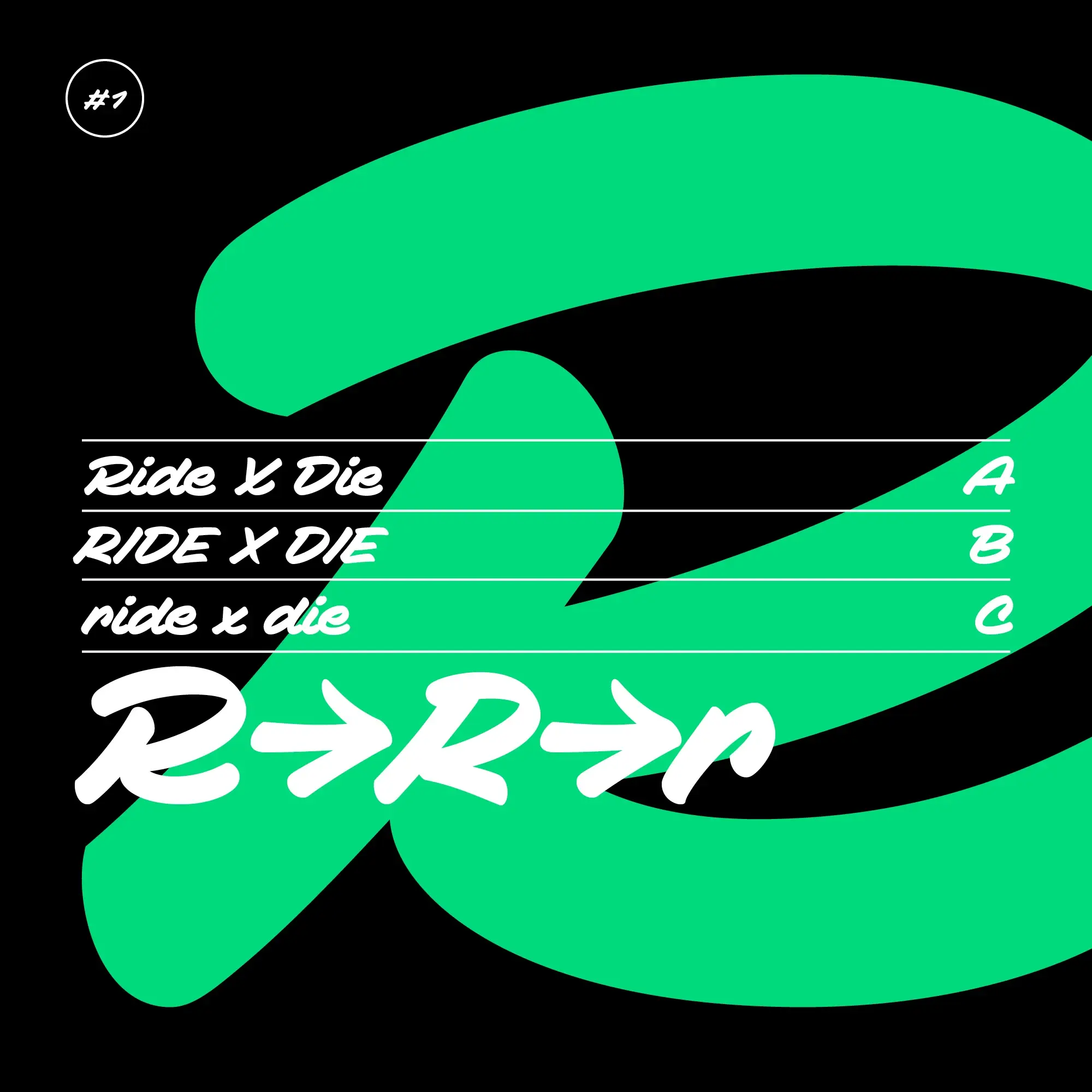
For Kakabus, the key characteristic oval stroke is defined by the round Centropen marker, whose tip is sharply terminated.
PD Kakabus
Regular
Starting at $90
BuyLC: Your designs feature a wide variety of styles. Where do you find your major sources of inspiration?
PD: Hand lettering with various tools and techniques, on different surfaces, at different speeds and in different styles—often inspired by historical manuscripts and unexpected discoveries while traveling.
LC: Also, your books and presentations have been some of my favorites over the years. Do you have any in development at the moment?
PD: I’ve temporarily shifted my focus to finishing some long-desired font projects and custom work. However, there’s one cursive typeface project I’m secretly working on that could become my next major workbook and presentation project—as soon as I return fully from maternity leave.
LC: Do you have a favorite example of seeing your type in the wild?
PD: Not yet—I’m mostly collecting the bizarre and unexpected ones! I’ve seen my typefaces used in many surprising ways: some great, but many in styles I personally wouldn’t choose. I’m still waiting for the moment when I see one of my fonts used exactly as I imagined it.
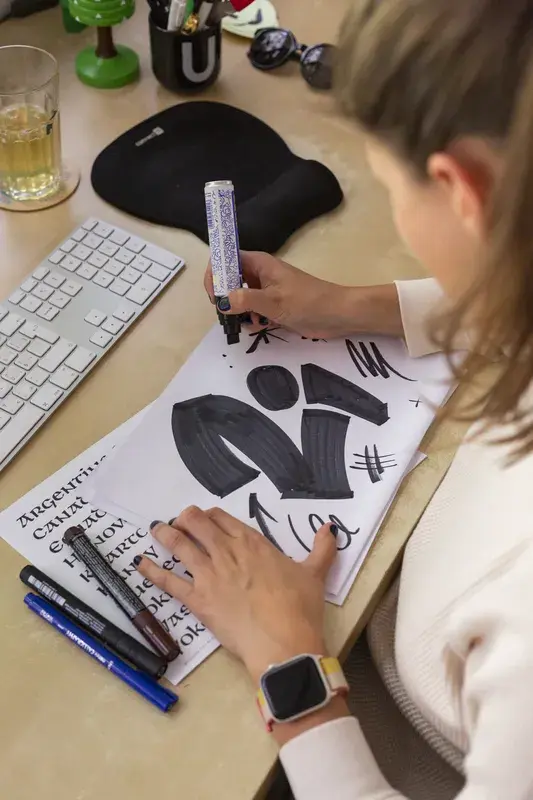
“Handwriting is far from obsolete; it’s alive, adaptable, and full of creative potential.”
—Petra Dočekalová
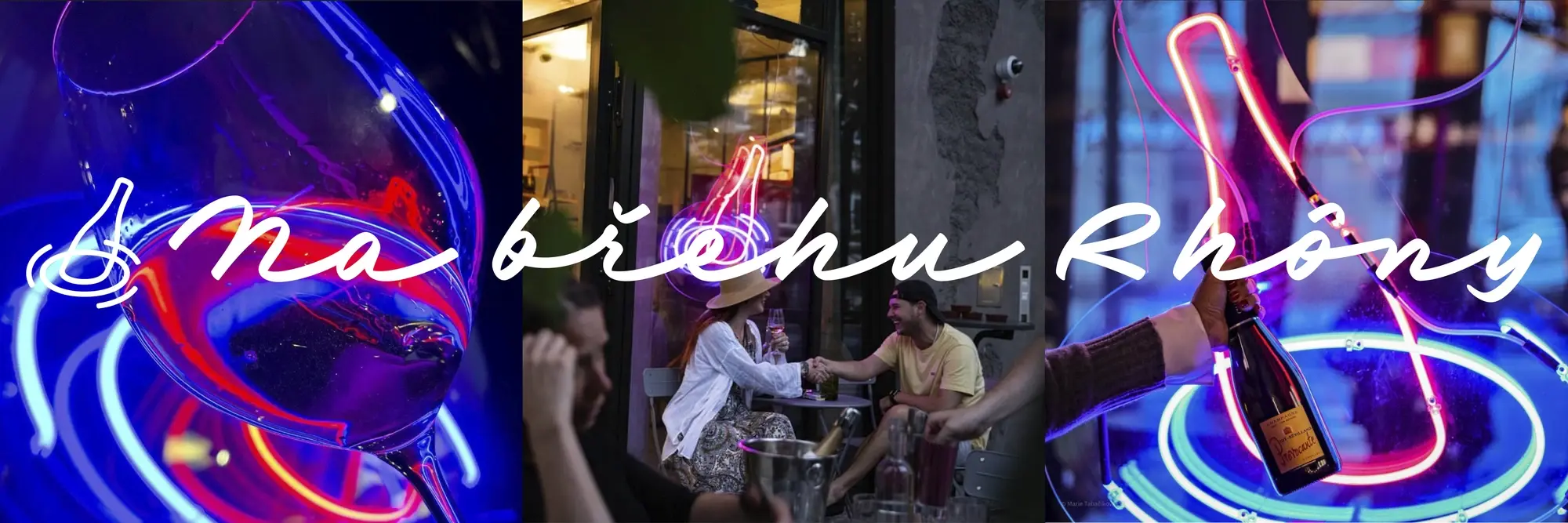
In between creating retail typefaces and writing books, Petra creates custom type solutions for brands. Na Břehu Rhôny is a distinctive wine shop and wine bar concept with multiple locations, primarily in Prague; for them, Petra created NBR Script, a customized version of Americano Script.
PD Americano
Variable Short
Starting at $90
BuyLC: Do you find that living and working in the Czech Republic is conducive to your type design work?
PD: The Czech Republic—and Prague especially—has a strong typographic heritage, and that tradition still feels very alive today. The design community is relatively small but deeply connected, with strong educational institutions and a culture that respects craft and detail. It creates a supportive yet critically demanding environment, which I find very motivating.
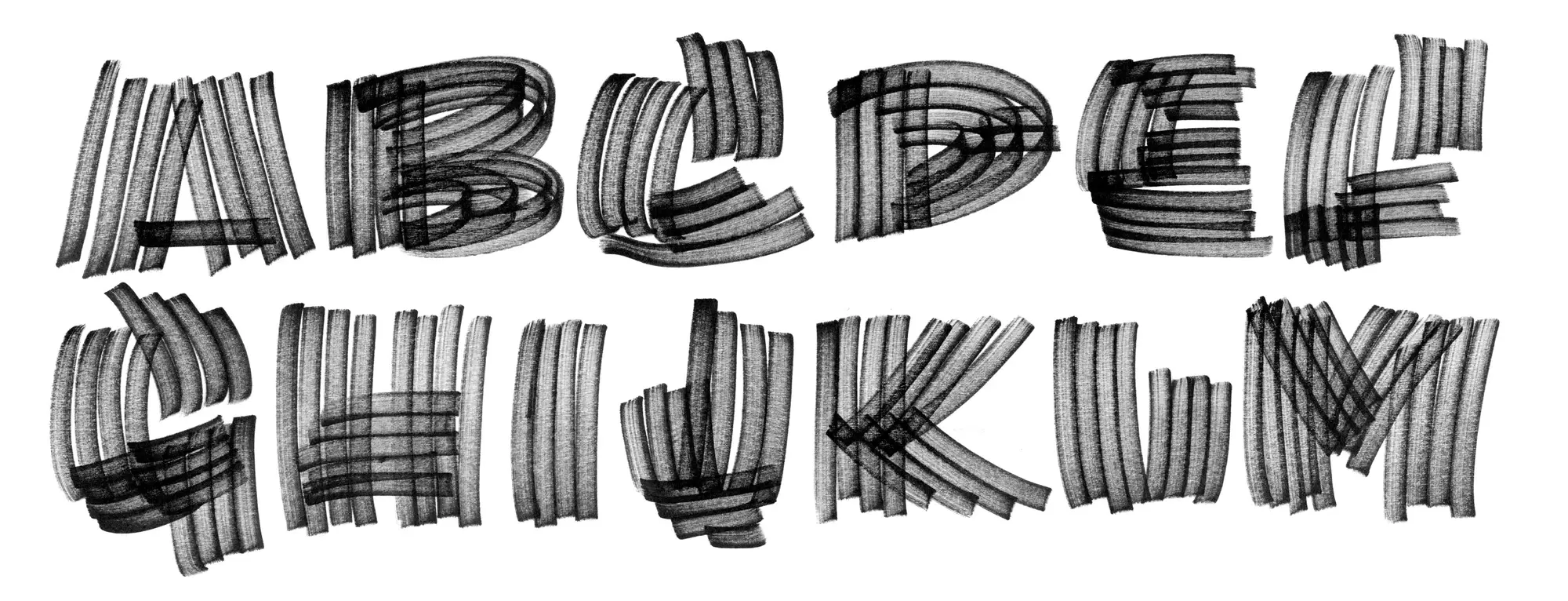
Some shape explorations that led to the design of Donut. 2016
LC: What does it mean for you to be joining Type Network? Who among the foundry partners are you most excited to be working with?
PD: Becoming a partner of Type Network means a lot to me—it feels like entering the world of true professionals with years of experience and being listed side by side with them, even though my foundry is still very young.
I have years of experience as a freelance type designer and type engineer, but running a business is a completely different arena, with much more competition. Joining Type Network feels like becoming part of a big type family that encourages, supports, and learns from some of the strongest players in the industry.
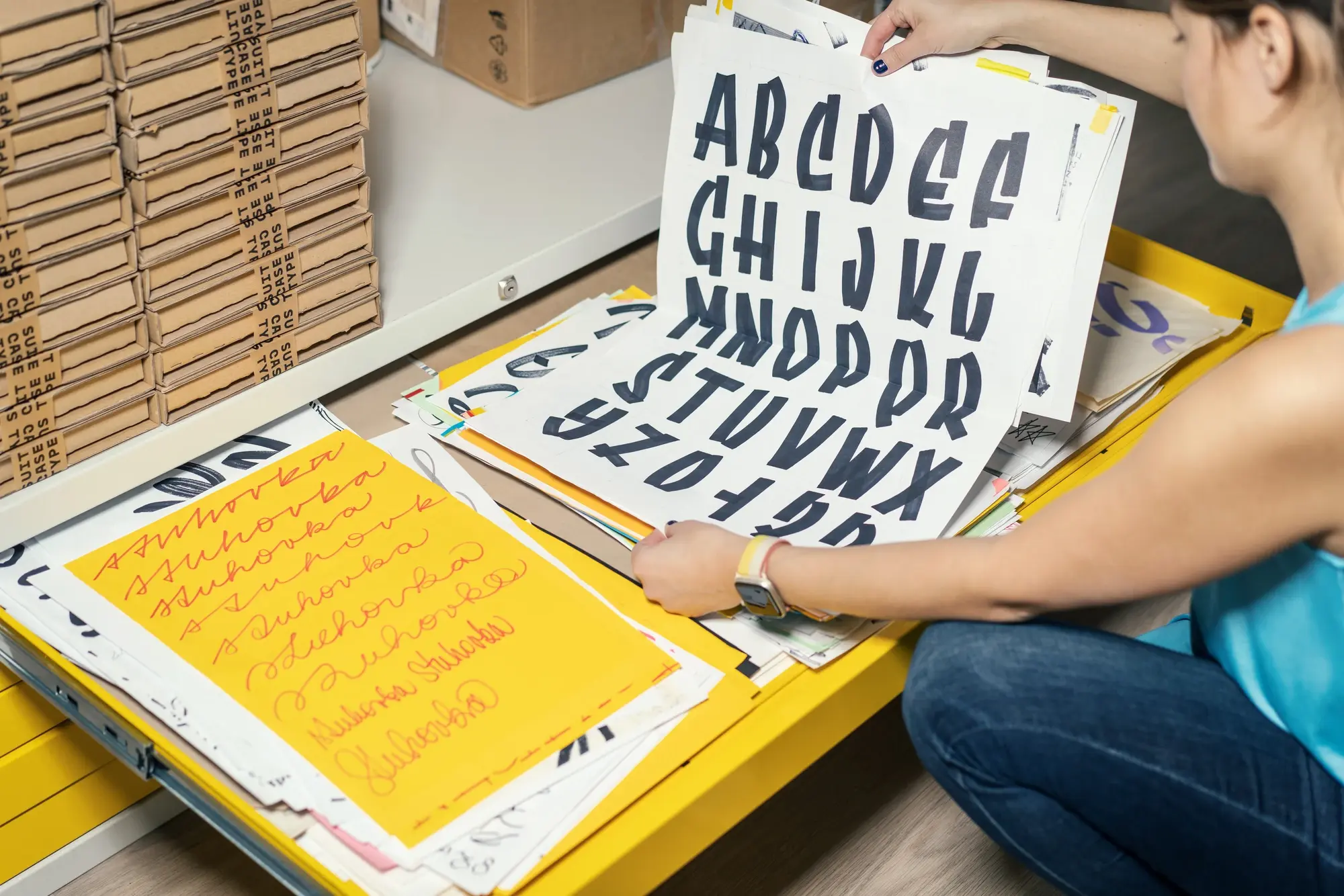
Petra keeps and catalogs almost every sketch, never knowing when an idea might come back as a typeface.
LC: What’s next for you?
PD: In the near future, I want to successfully complete two large projects: a new custom lettering-based font for a Czech climbing company and a new-school script cursive font for the progressive Czech school app Vividbooks.
In the bigger picture, I hope to continue working on more fonts and lettering projects while spending as much time as possible with my family.
All Petra-D Type Foundry fonts are available for print, web, applications, server, and enterprise licensing. To stay current on all things Petra-D, subscribe to our email newsletter featuring font analysis, designer profiles, type and design events, and more.